Key Takeaways
- In Arizona, a DUI triggers two separate processes: an MVD administrative suspension and a criminal court case, and both affect when you can get your license back.
- Deadlines are short—you generally have 15 days after a DUI arrest to request an administrative hearing with ADOT MVD if you want to challenge the automatic suspension.
- Reinstating a driver’s license usually requires completing the suspension period, paying MVD reinstatement fees, filing SR-22 insurance, and sometimes installing an ignition interlock device.
- Arizona penalties are harsher for commercial drivers and repeat offenders.
- Talking to a JacksonWhite DUI or criminal defense attorney early can protect your driving privileges.
Arizona DUIs and Your Driver’s License
A DUI arrest in Arizona almost always affects your driver’s license—often before your criminal court case is even finished. The moment you are arrested, the police officer will typically confiscate your license and issue a temporary license that is valid for only 15 days. This immediate action catches many drivers off guard.
This article is focused specifically on Arizona law and is written from the perspective of JacksonWhite Attorneys at Law. Under Arizona Revised Statutes § 28-1381, driving under the influence is defined as operating a motor vehicle while impaired to the slightest degree or with a blood alcohol content at or above .08 within two hours of driving. Commercial drivers are held to a stricter .04 standard when operating a commercial vehicle.
The following sections will walk you through what happens after a DUI arrest and how to get your license back after suspension or revocation. Keep in mind that this is general information, and anyone facing a DUI charge in Arizona should consult an attorney for advice tailored to their specific facts.

Understanding Arizona DUI License Suspensions
There is an important distinction between what happens at the Arizona Department of Transportation Motor Vehicle Division (ADOT MVD) and what happens in criminal court. A license suspension is a temporary withdrawal of driving privileges, while a license revocation is the complete termination of those privileges. In contrast to a suspension, a revocation means the driver must wait several years before applying for a new license.
Arizona uses an administrative suspension based on the implied consent law. When a driver either fails a breath test (BAC .08 or higher for non-commercial drivers) or refuses a chemical test after a lawful DUI arrest, the MVD can suspend the license independently of any criminal charge. Refusing to take a chemical test during a DUI stop can result in an automatic suspension.
Typical Suspension Lengths for a First DUI:
| Situation | Suspension Period |
| Failed test (first offense) | 90 days (30 days no driving + 60 days restricted) |
| Test refusal (first offense) | 12 months |
| Prior DUI within 84 months | 1 year or longer |
The length of a driver’s license suspension after a DUI can vary significantly, often lasting from a few months to several years depending on the number of offenses. License suspensions can occur for various reasons, including DUI convictions, and typically last for a defined period, after which the driver can apply for reinstatement.
The MVD suspension can run at the same time as, or in addition to, any license suspension imposed later by the criminal court after a DUI conviction.
The Administrative MVD Process After a DUI Arrest
In Arizona, there is an administrative hearing process that results in a suspension through the Department of Motor Vehicles. The ADOT MVD can suspend a license based solely on the DUI arrest and test results, regardless of whether criminal charges are ever filed. This is a civil action separate from your criminal case.
After your arrest, the police officer issues a pink temporary driving permit and a notice of suspension. Your original license may be seized at the scene. You generally have 15 days from service of the notice to request an administrative hearing to challenge the suspension. Missing this deadline usually causes the suspension to start automatically.
If the DMV orders a discretionary action against a person’s driving privilege, that person has the right to a hearing before the DMV to challenge the action and review the evidence supporting it. At an administrative hearing, the police officer involved in the arrest will present evidence before the hearing officer rules on the suspension.
The hearing will examine:
- Whether the officer had probable cause for the stop
- Whether the arrest was lawful
- Whether the breath test or blood test was properly administered
- Whether implied consent procedures were followed
If a driver does not test above the legal limit but is arrested for DUI, they will go through a hearing process to contest the suspension. A JacksonWhite DUI attorney can prepare evidence, subpoena the arresting officer, and represent the driver at the MVD hearing to try to avoid or shorten the administrative suspension.

Criminal Court DUI Convictions and License Consequences
Criminal court proceedings for a DUI conviction in Arizona are handled separately from MVD administrative actions. Depending on the severity of the charge, your case may be heard in city court, justice court, or superior court. A DUI conviction can lead to a driver’s license suspension, which is a common penalty for driving under the influence.
DUI Levels and License Penalties:
| DUI Level | BAC Threshold | Typical License Consequence |
| Standard DUI | .08+ | 90-day suspension |
| Extreme DUI | .15+ | 1-year suspension |
| Super Extreme DUI | .20+ | Extended suspension + IID |
| Aggravated DUI | Third in 7 years or DUI on suspended license | 3-year revocation |
A criminal court judge can order license suspensions, revocation, or restricted driving privileges as part of sentencing. These often come with mandatory ignition interlock requirements. If both MVD and criminal court impose suspensions, they may run concurrently or consecutively depending on timing.
Early involvement of JacksonWhite’s criminal defense attorneys can sometimes lead to reduced charges—such as a reckless driving amendment under A.R.S. § 28-693—that carry less severe license consequences.

Step-by-Step: How to Get Your License Back After a DUI in Arizona
To reinstate your driver’s license after a DUI, you typically need to complete certain requirements. The reinstatement process often involves multiple steps, and following them in order is essential.
Step 1: Verify Your License Status
Check your current status with ADOT MVD online at AZMVDNow.gov, by phone at 602-255-0072, or in person. Confirm whether your license is suspended, revoked, or restricted and for what specific reasons.
Step 2: Complete All Court Requirements
Calendar and complete all obligations from your DUI conviction: fines, jail time, probation terms, alcohol screening and education classes, and any community service. To reinstate a driver’s license after a DUI, individuals typically need to complete court ordered programs, pay fines, and provide proof of insurance.
Step 3: Complete MVD Requirements
Some states require individuals to complete alcohol education or rehabilitation programs as part of the reinstatement process after a DUI conviction. Arizona requires MVD-approved DUI education or treatment programs (typically 16–36 hours). Gather proof of completion certificates and court orders.
Step 4: Obtain SR-22 Insurance
Obtain SR-22 proof of financial responsibility from your insurance company. Arizona requires you to maintain this insurance coverage for at least three years after a DUI. Submit proof to MVD electronically through your insurer.
Step 5: Install Ignition Interlock Device If Required
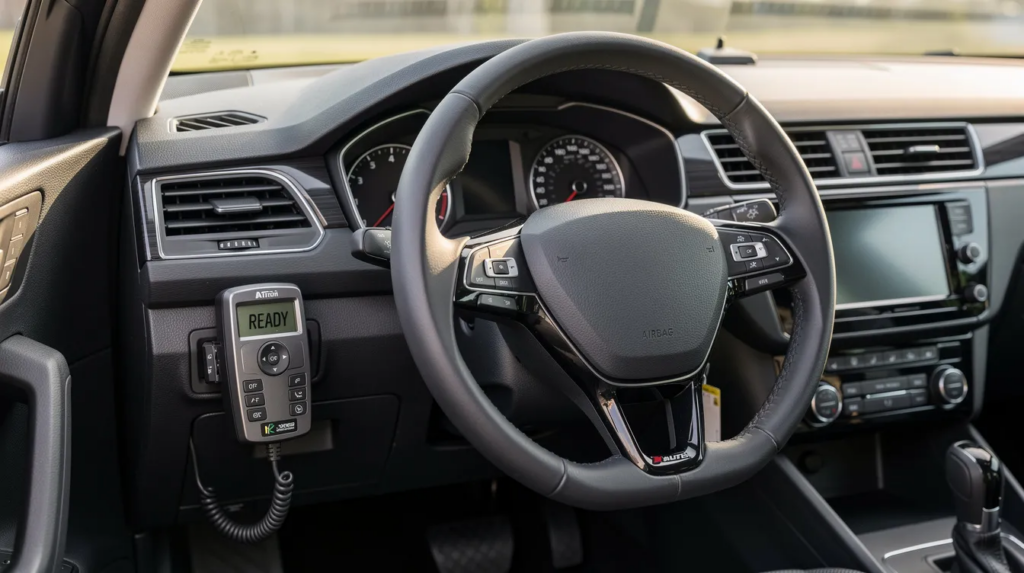
An ignition interlock device requires a breath sample to start the car and may be a condition for early reinstatement. If ordered, install the device on every vehicle you regularly drive using an MVD-approved provider. Typical costs run $100–$150 for installation plus $70–$100 monthly.
Step 6: Pay Reinstatement Fee
You must complete the full duration of your license suspension, which typically lasts from 90 days to several years depending on the severity of the offense and your driving history. After the suspension period ends, pay the MVD reinstatement fee ($50 for suspension, $125 for revocation) and any additional fees either online or at a local MVD office.
Step 7: Confirm Reinstatement
After the suspension ends, you must meet all reinstatement requirements, which may include proof of financial responsibility and payment of required fees. Verify that your license shows “reinstated”—not just “eligible for reinstatement”—before driving. You may be required to retake and pass vision, written, and driving exams if your license has been revoked or expired for a long period.
Restricted Licenses, Ignition Interlock, and Other Conditions
Many Arizona drivers are eligible for limited or restricted driving privileges during or after a DUI-related suspension, subject to strict conditions. In many states, a hardship license may be available for individuals to drive to work or school during the suspension, often requiring IID installation and proof of insurance.
Common restricted license options include permits allowing:
- Travel to and from work
- School attendance
- Court-ordered treatment programs
- Medical appointments
Arizona’s ignition interlock program is mandatory for many DUI convictions. For a first DUI offense, the typical requirement is 12 months with the device. The ignition interlock requires breath samples before starting the vehicle and at random intervals while driving. Missed calibrations or violations can result in 90-day suspension extensions and additional fees.
For some first-time offenders who complete all requirements early and maintain a clean record on the ignition interlock device, Arizona law may allow a reduction in interlock time under A.R.S. § 28-1464.02. JacksonWhite can help clients understand eligibility for restricted licenses and deal with any alleged interlock violations that might threaten their ability to get their license back.
Special Rules for Commercial Drivers and Out-of-State Issues
Commercial drivers face much harsher license consequences after a DUI in Arizona, even if the DUI offense occurred in a personal vehicle. Commercial driver’s license holders are held to a .04 BAC limit while operating a commercial motor vehicle.
A DUI arrest or refusal can trigger at least a one-year CDL disqualification for a first offense. A second offense can result in lifetime CDL disqualification under Arizona law and federal regulations (49 CFR § 383.51), severely impacting a commercial driver’s career.
Arizona DUI suspensions and convictions are reported to other states through the AAMVA compact. Out-of-state drivers arrested in Arizona often face license consequences in their home state as well. The requirements for reinstating a driver’s license after a DUI can vary significantly by state, including the duration of suspension and specific conditions that must be met for reinstatement.
Commercial drivers and out-of-state drivers should contact JacksonWhite promptly to coordinate defense strategies and understand how Arizona decisions will interact with federal and home-state licensing rules.
How an Arizona DUI Attorney Can Help Protect Your License
Arizona’s DUI and license-suspension laws are complex. Mistakes or missed deadlines can extend the time before someone can lawfully drive again. The 15-day window to request an MVD hearing is non-negotiable, and unrepresented drivers often experience 20–30% longer total downtime.
JacksonWhite’s criminal law team can intervene immediately after a DUI arrest to request the MVD administrative hearing and challenge the stop, the breath test, or the refusal allegation. An attorney can also negotiate with prosecutors in criminal court to seek reduced charges, alternative sentencing, or plea agreements that limit license suspensions and ignition interlock requirements.
Having experienced legal guidance often shortens the time it takes to lawfully drive again and reduces the risk of new criminal charges for driving while suspended or revoked.

Frequently Asked Questions About Getting Your License Back After an Arizona DUI
These FAQs address common practical questions specific to Arizona law. Individual circumstances vary, so consulting with an attorney is always recommended.
How long will a DUI stay on my driving record in Arizona?
A DUI stays on your criminal record indefinitely in Arizona, though the state treats it as a “priorable” offense for enhancement purposes within an 84-month (7-year) lookback period. Your MVD driving record retains DUI information much longer. Setting aside a conviction under A.R.S. § 13-905 does not erase MVD history or automatically restore all driving privileges.
Can I drive to work while my license is suspended for a DUI?
Driving during a full suspension without a restricted license is illegal and can lead to new criminal charges. However, after serving 30 days of absolute no-driving, some drivers may qualify for a restricted license allowing travel to work, school, treatment, or medical appointments. Some states may require a hearing with a secretary of state officer to demonstrate the individual is not a threat to public safety before reinstating driving privileges. Contact JacksonWhite to determine your eligibility.
What happens if I drive without getting my license officially reinstated?
Driving on a suspended or revoked license is a separate serious charge in Arizona—a Class 1 misdemeanor carrying additional fines of $1,000 or more, possible jail time, and longer suspension periods. A new conviction complicates efforts to get your license back and may lead to an aggravated DUI charge if stopped while impaired again. Always verify your status with MVD before driving.
Do I have to install an ignition interlock device for a first DUI in Arizona?
Yes, in many first offense DUI cases, Arizona law requires an ignition interlock device for around 12 months, even without an accident or injury. The exact duration depends on the type of DUI (standard, extreme, super extreme, or aggravated). Some drivers may qualify for reduced time with full compliance and no violations.
How much will it cost to reinstate my license after a DUI in Arizona?
Costs typically include the MVD reinstatement fee ($50–$125), court fines ($1,000+), alcohol screening and classes ($500–$600), ignition interlock device ($2,000+ annually), and higher insurance premiums with SR-22 filings ($3,000+ annually). Total first offense costs often reach $5,000–$10,000. An attorney cannot eliminate all costs but may help reduce long-term expenses by minimizing suspension lengths.
Contact JacksonWhite for Help Getting Your License Back
Arizona DUI cases move quickly, and protecting your driver’s license requires early, informed decisions. If you are facing a DUI arrest, pending DUI conviction, or an active license suspension in Arizona, contact the JacksonWhite criminal law team today at (480) 745-1639 to schedule a confidential consultation.
Our DUI attorneys will review your MVD record, court paperwork, and deadlines to create a tailored strategy for restoring your driving privileges as efficiently as possible. Personalized legal advice can make a significant difference in how soon you can get your license back.