When a truck accident changes your life in an instant, understanding the legal framework that governs commercial trucking operations becomes essential to pursuing fair compensation. Arizona highways see thousands of commercial motor vehicles every day, and the federal regulations governing these trucks can significantly impact how your injury claim unfolds. This article explains which federal trucking regulations may apply to your Arizona case and how violations of these rules can serve as powerful evidence of negligence.
Key Takeaways
- Federal trucking regulations, specifically the Federal Motor Carrier Safety Regulations (FMCSRs) found in 49 C.F.R. Parts 350–399, establish minimum safety standards for commercial trucks and their operators. These rules are administered by the Federal Motor Carrier Safety Administration (FMCSA), whose mission is to reduce crashes, injuries, and fatalities involving large trucks and buses. Historically, the Federal Highway Administration played a key role in developing and overseeing safety laws for trucks and buses on U.S. highways.
- Most commercial truck crashes on major Arizona highways such as I-10, I-17, I-8, I-40, and US-60 involve interstate carriers subject to federal law, even though the actual injury claim is governed by Arizona negligence law and the state’s comparative fault system under A.R.S. § 12-2505.
- Violations of key federal rules—including commercial driver’s license qualifications, Hours of Service limits, drug and alcohol testing protocols, vehicle maintenance requirements, and cargo securement standards—can serve as powerful evidence of negligence or even negligence per se against the trucking company or driver.
- Arizona’s two-year statute of limitations under A.R.S. § 12-542 controls when you must file your lawsuit, but the federal records and safety data that often make or break a truck accident case may only be retained for limited periods, making early legal action critical.
- The JacksonWhite personal injury team investigates potential federal regulation violations and uses documented safety failures to pursue maximum compensation for Arizona clients who have been injured or lost a loved one in a commercial truck crash.
How Federal Trucking Law Interacts with Arizona Accident Claims
Injury and wrongful death cases arising from truck crashes in Arizona are fundamentally state-law claims. You file your lawsuit in Arizona court, and Arizona rules govern procedure, evidence, and damages. However, federal trucking regulations set the safety standards that Arizona juries and judges frequently look to when deciding whether a truck driver or motor carrier acted negligently.
The Federal Motor Carrier Safety Administration, an agency within the U.S. Department of Transportation established by the Motor Carrier Safety Improvement Act of 1999, regulates commercial motor vehicles operating in interstate commerce. The FMCSA’s core mission is to reduce crashes, injuries, and fatalities involving large trucks and buses, and the agency oversees more than four million commercial driver’s license holders nationwide. The safety rules it enforces are codified in Title 49 of the Code of Federal Regulations, primarily in Parts 350 through 399.
These federal regulations typically apply when a commercial vehicle exceeds 10,001 pounds gross vehicle weight rating and operates in interstate commerce—criteria that cover the vast majority of semi-trucks and tractor-trailers traveling through Arizona. While Arizona also has its own motor carrier rules and traffic statutes administered by agencies like the Arizona Department of Public Safety, Arizona courts often treat FMCSA regulations as persuasive evidence of the standard of care that professional drivers and motor carriers owe to the public. For example, if an out-of-state carrier hauling freight between California and Texas causes a collision on I-10 near Phoenix, the federal rules governing that carrier’s operation become directly relevant to proving fault in your Arizona injury claim.
When Do Federal Trucking Regulations Apply in Arizona? (Jurisdiction and Coverage)
Not every crash involving a truck triggers FMCSA rules. Understanding which trucks, drivers, and companies fall under federal jurisdiction helps you know what evidence may be available and what safety standards apply.
FMCSRs generally apply to: commercial motor vehicles with a gross vehicle weight rating or gross combination weight rating of 10,001 pounds or more – vehicles transporting hazardous materials in quantities requiring placards – vehicles designed or used to transport 9 or more passengers for compensation, or 16 or more passengers not for compensation, when operating in interstate commerce. A “straight truck” is a type of motor vehicle where the cab and cargo area are on the same chassis, often used in agricultural transport; covered farm vehicles can include straight trucks, and these may qualify for certain exemptions based on registration, operation area, and weight limits.
The phrase “interstate commerce” is critical. It means trade, traffic, or transportation that crosses state lines or is part of a continuous movement of goods between states. A load picked up in Phoenix for delivery to New Mexico is interstate commerce. Freight shipped from California to a Phoenix distribution center is interstate commerce. A truck passing through Arizona on its way from Texas to Nevada is interstate commerce. Even a crash that happens entirely within Arizona city limits—in Mesa, Glendale, or Tucson—falls under federal jurisdiction if the truck’s overall operation or the shipment it carries is interstate in nature.
Consider a practical example: a driver picks up cargo in Los Angeles, drives through Arizona on I-10, and plans to deliver in El Paso. That driver rear-ends a passenger vehicle in downtown Phoenix. Even though the accident occurred entirely within one city, federal trucking regulations apply because the journey itself is interstate. The driver’s Hours of Service, the truck’s maintenance records, the carrier’s drug testing program—all of it is subject to federal rules.
For intrastate-only Arizona carriers—those that pick up and deliver cargo exclusively within Arizona’s borders without any connection to interstate shipments—similar state-adopted versions of FMCSRs may apply. An experienced attorney can review the specific carrier’s operations, the load documentation, and the route to determine precisely which federal or state regulations govern the truck involved in your crash.
Key Federal Regulations That Often Matter in Arizona Truck Accident Cases
Current U.S. trucking regulations focus on safety and efficiency through strict Hours of Service, Electronic Logging Devices, and drug testing. Several specific categories of FMCSA regulations frequently become central issues when litigating truck accident cases in Arizona. Understanding these rule sets helps explain what your attorney will investigate and what kinds of evidence can strengthen your claim.
The main regulatory areas addressed in Arizona truck accident litigation include:
| Regulatory Category | Primary CFR Parts | What It Covers |
| Driver Qualification & CDL | Parts 382, 383 | Licensing, age, medical certification, driving history |
| Hours of Service | Part 395 | Driving time limits, rest requirements, ELD mandates |
| Drug & Alcohol Testing | Part 382 | Testing programs, Clearinghouse records |
| Vehicle Maintenance | Parts 392, 396 | Inspections, repairs, DVIRs |
| Cargo Securement & Hazmat | Parts 393, 171-180 | Load security, tie downs, hazardous material handling |
| Company Safety Management | Parts 390-399 | Hiring, training, supervision, safety programs |
Violation of any of these federal areas can provide critical leverage in settlement negotiations and at trial. When a carrier fails to meet minimum national safety standards, that failure becomes evidence that the defendant did not exercise reasonable care—a cornerstone of any negligence claim.
Driver Qualification and CDL Requirements
FMCSA driver qualification rules in 49 C.F.R. Parts 382 and 383 establish who is legally permitted to operate commercial motor vehicles on America’s highways. These rules cover Commercial Driver’s Licenses, endorsements for specialized operations, and the circumstances under which a driver becomes disqualified from operating.
New federal standards require specific training for obtaining a Commercial Driver’s License or endorsements under Entry-Level Driver Training. Additionally, the Federal Motor Carrier Safety Administration (FMCSA) requires that all commercial drivers undergo regular health screenings and pass a series of written and practical tests to ensure they are fit to drive. Drivers of commercial motor vehicles must comply with the FMCSA’s physical qualification standards, which include passing a medical examination conducted by a certified medical examiner listed on the National Registry.
A commercial truck driver operating a typical tractor-trailer on Arizona highways must: hold a valid CDL of the proper class (usually Class A) with appropriate endorsements such as doubles/triples, tanker, or hazmat – be at least 21 years old for interstate driving – pass an initial DOT physical exam and periodic medical recertifications (typically every 24 months) – have a driving record that meets federal standards, free of disqualifying offenses like DUI or excessive speeding.
Motor carriers bear responsibility for verifying their drivers meet these requirements. They must check Motor Vehicle Records, review employment history, and contact references going back three years. When a carrier hires or retains a driver who should have been disqualified, the carrier itself becomes liable for negligent hiring or negligent retention.
In a crash case, attorneys investigate: whether the driver was properly licensed on the date of the Arizona collision – whether the motor carrier reviewed the driver’s prior driving history and employment references – whether the driver had prior disqualifying violations that the employer ignored.
Picture a driver whose CDL was suspended following a DUI conviction in another state. The trucking company either failed to check the driver’s record or ignored the suspension and allowed the driver to operate a semi on I-17 toward Flagstaff. When that driver causes a serious crash, the violation of federal qualification rules supports both direct negligence claims against the driver and negligent hiring or retention claims against the carrier.
Arizona plaintiffs may argue that violation of these federal qualification rules constitutes negligence per se—meaning the violation itself establishes breach of duty without needing additional proof of unreasonable conduct. Even where courts do not formally adopt negligence per se, evidence that a driver operated without proper credentials is highly persuasive to Arizona juries evaluating fault.
Hours of Service (HOS), Fatigue, and Electronic Logging Devices
Fatigue is a major contributor to truck accidents. A drowsy driver operates a multi-ton vehicle with slowed reaction times, impaired judgment, and reduced awareness—a dangerous combination on high-speed Arizona highways. FMCSA’s Hours of Service regulations in 49 C.F.R. Part 395 directly address this risk by limiting how long truck drivers can drive and work before mandatory rest periods.
Key current HOS rules for property-carrying drivers include: an 11-hour driving limit after 10 consecutive hours off duty – a 14-hour “driving window” limit, meaning all driving must occur within 14 hours of coming on duty – a 30-minute break requirement after 8 cumulative hours of driving – a 60-hour limit over 7 consecutive days, or 70 hours over 8 days, with reset options requiring extended off-duty periods.
Since December 2017, most interstate drivers must use Electronic Logging Devices that automatically record driving time through GPS and engine connection data. ELDs create tamper-evident electronic records that are far more reliable than the old paper logbooks, which drivers could easily falsify. This electronic data becomes crucial evidence in truck accident litigation.

Arizona injury attorneys pursue ELD data, dispatch records, fuel receipts, and weigh-station records to reconstruct whether the driver exceeded HOS limits in the hours or days leading up to the crash. Federal rules require carriers to retain HOS records for at least six months, so obtaining this evidence quickly is essential. Routes like I-10 across the desert, I-40 through northern Arizona, and US-93 toward Nevada are particularly prone to fatigue-related crashes due to long distances, limited services, and monotonous driving conditions.
Evidence that a driver was operating beyond allowed hours when a crash occurred is compelling proof of negligence. In cases where the carrier knew about or encouraged HOS violations—perhaps through dispatch pressure to meet unrealistic delivery schedules—Arizona law may support punitive damages for conscious disregard of substantial risk to others.
Drug and Alcohol Testing Requirements
Federal regulations in 49 C.F.R. Part 382 require motor carriers to implement comprehensive drug and alcohol testing programs. Commercial drivers operating vehicles subject to FMCSRs must submit to testing at multiple points:
- Pre-employment testing before operating a commercial motor vehicle for a new employer
- Random testing at specified annual rates (50% of drivers for drugs, 10% for alcohol)
- Post-accident testing after crashes involving fatalities, injuries requiring transport, or citations for certain violations
- Reasonable suspicion testing when a supervisor observes signs of impairment
- Return-to-duty testing before a driver can resume operating after a violation
Post-accident drug tests must occur within 32 hours of the crash, and alcohol tests within 8 hours. Positive results bar the driver from operating until completing rehabilitation and return-to-duty requirements.
Since January 2020, the FMCSA Drug & Alcohol Clearinghouse has maintained records of all drug and alcohol program violations, making it easier for carriers to check whether prospective drivers have prior offenses. Attorneys can query this database to determine whether a driver involved in an Arizona crash had a history of substance abuse issues that the carrier knew about or should have discovered.
Lawyers reviewing an Arizona truck accident case examine: whether the driver had any prior positive tests or refusals recorded in FMCSA’s Drug & Alcohol Clearinghouse – whether the employer enrolled the driver in a compliant testing program – whether required post-crash testing was actually performed and documented.
A positive test result, or evidence that the carrier ignored testing obligations, strongly supports liability and may influence punitive damage considerations under Arizona law. Even when test results are “negative,” irregularities in timing or testing procedures can demonstrate safety mismanagement by the trucking company—for instance, if post-accident tests were administered outside the required timeframe or documentation is incomplete.
Truck Inspection, Repair, and Maintenance Obligations
Commercial vehicles operating on Arizona roads must be properly maintained to ensure safe operation. Federal regulations in 49 C.F.R. Parts 392 and 396 establish detailed requirements for inspections, repairs, and maintenance documentation.
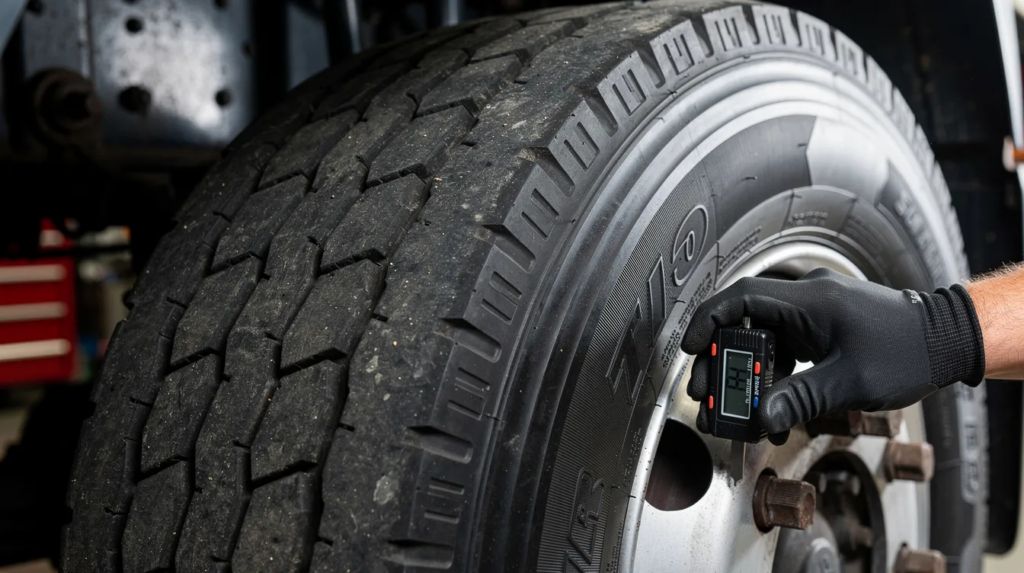
Drivers must conduct pre-trip inspections before operating their vehicles and complete Driver Vehicle Inspection Reports (DVIRs) documenting any defects or deficiencies. These reports, which can be electronic or paper-based, must note the condition of critical components including service brakes, trailer brake connections, steering mechanism, lighting devices, windshield wipers, coupling devices, emergency equipment, warning devices, and seat belts. FMCSA regulations also require trucking companies to inspect vehicles for defects and dangers regularly, at least once every 12 months.
In a typical Arizona truck accident case, attorneys investigate: pre-trip and post trip inspections records – annual inspection certificates – maintenance logs for critical systems like brakes, tires, lights, steering, and coupling devices.
The physical demands of Arizona driving make maintenance particularly critical. Trucks descending the steep grades near Flagstaff subject their brake systems to extreme stress. Desert temperatures on I-10 between Phoenix and Tucson accelerate tire wear. Dust and heat tax cooling systems and engines. When a crash results from a mechanical failure—brake fade, tire blowout, steering loss—the question becomes whether proper maintenance would have prevented the defect.
Missing or falsified inspection records suggest the carrier lacked an adequate safety program. If a driver operates a truck with known defects documented on prior DVIRs that were never repaired, both the driver and carrier bear responsibility. These maintenance failures differ from product liability claims against manufacturers; the key question is whether the trucking company met its duty to keep such a vehicle in safe operating condition, not whether the component itself was defectively designed.
Cargo Securement and Hazardous Materials Rules
How cargo is loaded, secured, and transported directly affects highway safety. Unsecured or improperly distributed loads can cause rollovers, jackknives, or cargo spills that endanger other motorists. DOT cargo securement regulations are designed to ensure that cargo does not shift, leak, spill, or fall off a truck while in transit. Federal cargo securement rules in 49 C.F.R. Part 393 establish requirements for tie downs, blocking, bracing, and load distribution that apply to all types of freight.
Hazardous materials transportation faces additional regulation under 49 C.F.R. Parts 171-180, including requirements for placarding, shipping papers, driver training, and material segregation. Drivers transporting hazmat must hold special endorsements and undergo TSA security vetting. Given Arizona’s role as a transportation corridor between California, Texas, and Mexico, significant hazmat traffic passes through the state daily.
Proper cargo securement involves using tie-downs, straps, and chains that meet specific strength criteria to immobilize or restrain cargo, and may also involve other means of securing cargo to ensure safety and compliance. In case review, attorneys examine: bills of lading and load documentation – photographs of the cargo and trailer interior if available – compliance with required tie downs, blocking, bracing, and weight distribution rules ensuring cargo is properly distributed – proper hazardous materials placarding and paperwork where applicable.
Drivers are required to carry important documentation and equipment, such as bills of lading, proof of delivery, and hazardous materials paperwork, to ensure compliance during inspections.
Failure to follow federal cargo rules can make multiple parties responsible. The driver who operated without inspecting load security bears fault. The carrier that failed to train drivers on proper securement shares liability. In some situations, the shipper or loading facility that created the unsafe condition may also face claims.
Consider a tanker truck carrying fuel. If the driver loses control due to liquid surge from an improperly filled tank, and the resulting crash causes a fire that injures multiple people, the investigation will focus on whether proper loading procedures were followed, whether the driver was trained on tanker operation, and whether the carrier had systems in place to ensure compliance with hazmat rules. Such incidents can cause catastrophic injuries and may involve environmental contamination claims beyond personal injury.
Company Safety Management and Supervision Duties
Beyond individual rules targeting drivers and vehicles, the FMCSA framework in 49 C.F.R. Parts 390-399 expects motor carriers to create and enforce comprehensive safety management programs. Carriers cannot simply hire drivers, hand them keys, and hope for compliance. They must actively manage fleet safety through systematic policies and oversight.
In Arizona litigation, plaintiff’s counsel often investigates: hiring and training policies for new drivers – supervision and discipline for safety violations – internal audits of logbooks and ELD records – company safety ratings and prior FMCSA violation history.
FMCSA assigns employees within its organization to review carrier safety performance and assign safety ratings (satisfactory, conditional, or unsatisfactory) based on compliance reviews and crash data. Carriers with poor ratings statistically experience more crashes. When a carrier’s safety rating reveals a pattern of violations, that history becomes evidence of systemic negligence rather than an isolated mistake.
Systemic failures—such as routinely pressuring drivers to violate Hours of Service to meet delivery deadlines, or ignoring repeated safety citations—demonstrate corporate negligence that may support claims for punitive damages under Arizona law. JacksonWhite typically subpoenas company manuals, safety meeting notes, driver training records, and prior crash files to understand whether the collision reflects a one-time error or a broader culture of noncompliance. Evidence that the carrier chose to improve compliance only after serious incidents, or ignored opportunities to address known problems, strengthens the case for enhanced damages.
Emergency Equipment and Procedures for Commercial Trucks
When you’re operating a commercial truck, FMCSA regulations make it clear that your vehicle must be equipped with essential emergency equipment to protect both you and the public when things go wrong (breakdowns, accidents, or other roadside emergencies). The required emergency equipment includes at least one fire extinguisher, a set of reflective triangles or flares for warning other motorists, and spare fuses for lighting devices. These items aren’t just suggestions—they must be easily accessible and in good working order at all times.
As a truck driver, you’re required to be properly trained in how to use this emergency equipment, and you must know how to deploy warning devices to alert oncoming traffic if your vehicle becomes disabled. You should also be familiar with important procedures like securing the vehicle after a breakdown, responding to medical emergencies (which can happen to anyone on the road), and reporting incidents to both your company and the appropriate authorities. Trucking companies, for their part, must establish clear policies for emergency response, including protocols for emergency repairs, maintenance, and communication with dispatch.
Here’s something that’s crucial to understand: regular inspection and maintenance of your emergency equipment are absolutely essential to ensure you’re ready when an incident occurs. FMCSA regulations require that emergency equipment be checked during both pre-trip and post-trip inspections, and any deficiencies must be addressed immediately (no exceptions). By following these safety regulations, both drivers and motor carriers help reduce the risk of secondary accidents and improve overall highway safety for everyone sharing the road with commercial vehicles.
Adverse Driving Conditions and Weather-Related Federal Rules
When you’re operating commercial motor vehicles in challenging driving conditions—think ice storms, heavy rain, thick fog, or snow—you need to follow strict federal regulations that are specifically designed to reduce crashes and fatalities involving large trucks. The FMCSA regulations tell drivers to exercise extreme caution during hazardous weather and, if conditions get too dangerous, to slow down or even stop driving until things improve. These rules become especially critical for fleet safety when you’re transporting cargo across state lines, where weather can change rapidly and without much warning.
As a driver, you must be properly trained to recognize adverse driving conditions and know how to use the right safety measures when they hit. This includes activating your headlights (even during the day when visibility drops), using windshield wipers effectively, and employing traction devices like tire chains when they’re required by law or conditions. The regulations do allow for limited extensions of driving hours in certain adverse conditions, but only if it’s actually safe to continue—not just because you’re behind schedule. Trucking companies have the responsibility to develop solid policies and procedures for managing routing and scheduling around severe weather, making sure that drivers aren’t pressured to operate in unsafe conditions (no matter how tight the delivery deadline might be).
By following FMCSA regulations and your company’s policies for adverse driving conditions, both motor carriers and drivers can work together to reduce the risk of crashes, protect lives, and maintain compliance with federal safety standards. These proactive measures aren’t just good practice—they’re essential for the safe transportation of goods and people, especially given the troubling statistics about fatalities involving large trucks during inclement weather. Proper training, careful planning, and strict adherence to federal rules are the key ingredients for keeping both drivers and the general public safe on our nation’s highways.
How Evidence of Federal Regulation Violations Is Used in an Arizona Truck Accident Claim
Identifying FMCSA violations is only the first step. The critical legal question is how those violations translate into liability, causation, and damages in your Arizona civil claim.
In practice, attorneys use federal violations to: establish that the truck driver or motor carrier breached a recognized safety standard – link that breach to the cause of the crash and resulting injuries – argue for negligence per se or at least strong circumstantial evidence of negligence under Arizona law – increase the value of settlement negotiations and strengthen trial presentations.
Arizona courts permit parties to introduce evidence of federal regulations when determining whether a defendant acted reasonably. While FMCSA rules are not automatically binding standards in state tort cases, judges often allow juries to consider them as evidence of what a reasonable professional driver or carrier should have done. The argument is straightforward: if the federal government determined that certain practices are necessary for highway safety, failing to follow those practices suggests unreasonable conduct.
Expert witnesses frequently play important roles in connecting federal violations to crash causation. Accident reconstructionists can analyze ELD data alongside physical evidence to demonstrate how fatigue affected driver reaction time. Former safety directors can testify about industry practices and explain how a proper safety management program would have prevented the violation. Medical experts can link the severity of injuries to the forces involved in the collision, which may relate to speed, vehicle maintenance, or load securement issues.
The practical impact appears in settlement negotiations. Insurance adjusters and defense attorneys understand that documented federal violations create significant trial risk. A carrier facing clear evidence of HOS violations, maintenance failures, or hiring negligence has strong incentive to settle rather than let a jury see that evidence. Conversely, cases without documented violations often require more intensive litigation to establish fault.
What To Do After a Truck Crash in Arizona If You Suspect Federal Violations
A truck accident can leave you dealing with serious injuries, mounting medical bills, lost income, and uncertainty about your future. Understanding the difference between federal and state law may feel overwhelming when you’re focused on recovery. Here are practical steps to protect your interests.
Concrete steps for injured people include: seek immediate medical attention and follow all treatment recommendations, as gaps in treatment can be used against you – preserve photos, videos, and witness contact information from the crash scene if you or someone with you is able to do so – avoid extensive conversations with the trucking company’s insurer before speaking with counsel, since adjusters may seek statements that limit your recovery – contact an Arizona truck accident attorney promptly so that critical FMCSA-related evidence such as ELD data, maintenance records, and driver files can be preserved before it is altered or lost.
Time is particularly important with federal trucking records. Motor carriers are only required to retain certain records for limited periods. Hours of Service logs and ELD data may be kept for as little as six months. Driver qualification files have longer retention requirements, but the key electronic data documenting what happened in the hours before your crash may be deleted or overwritten if you wait too long to take legal action.
Arizona’s general statute of limitations for personal injury claims is two years under A.R.S. § 12-542. While two years may seem like adequate time, building a strong truck accident case requires early investigation. Some situations involve shorter notice deadlines—claims against government entities, for instance, have much tighter timelines. Wrongful death claims, while generally following the two-year period, may involve additional procedural requirements.
Every truck accident case is unique. The specific federal regulations that apply, the evidence available, and the parties who may be liable all depend on the particular facts of your crash. Whether your accident occurred on a busy Phoenix interchange, a rural highway near the state lines, or during adverse driving conditions like an ice storm in northern Arizona, a personalized legal review is necessary to determine which rules govern your situation and how to proceed.
Frequently Asked Questions About Federal Trucking Regulations and Arizona Accident Cases
Do federal trucking regulations still matter if my Arizona crash was only within one city?
Even if the crash occurred entirely within a single Arizona city, federal rules may still apply if the truck or shipment is part of interstate commerce. The location of the crash does not determine jurisdiction—what matters is whether the carrier’s operation or the specific load being transported involves movement across state lines or as part of interstate trade. An attorney can review the carrier’s operating authority, the bill of lading, and the shipment details to determine whether FMCSA regulations govern the truck involved. Arizona law will control the injury claim itself, but federal rules provide the safety standards used to evaluate whether the driver and company acted reasonably.
Will a federal investigation automatically prove my Arizona truck accident case?
Agencies such as FMCSA or the Arizona Department of Public Safety may investigate serious crashes and issue violation reports or citations. While these findings can be helpful, they are not by themselves conclusive proof of civil liability in an Arizona court. Federal and state investigations often focus on regulatory compliance or criminal violations, using different standards and procedures than civil litigation. Civil cases apply a preponderance of evidence standard, and attorneys must independently establish each element of negligence. JacksonWhite obtains and analyzes any available federal or state investigative materials but also conducts independent discovery and retains experts to build the strongest possible case for each client.
Can I still bring a claim if I think the truck driver only broke state traffic laws and not federal rules?
Yes, a strong Arizona negligence claim can exist even if the truck driver appears to have violated only state traffic laws—such as speeding, improper lane change, following too closely, or failing to yield—rather than any clear FMCSA regulation. Federal rules are one set of safety standards, but Arizona’s traffic code and ordinary principles of reasonable care also establish duties that commercial drivers must follow. Many truck accidents involve straightforward negligence without any federal regulatory component, and compensation remains available. JacksonWhite evaluates both state and federal law angles to ensure all potential grounds for recovery are identified.
How long do trucking companies have to keep their federal safety records?
Different federal records have different minimum retention periods. Hours of Service logs and many ELD records must generally be kept for at least six months. Driver qualification files, including employment applications, medical certificates, and driving history reviews, typically require longer retention of several years. Maintenance records and annual inspection documents have their own retention schedules. Because some key evidence can be lawfully destroyed after relatively short timeframes, speaking with an attorney quickly is critical. Preservation letters and discovery requests sent early can prevent the trucking company from destroying or overwriting electronic data that could prove your case.
Why Work with the JacksonWhite Personal Injury Team on an Arizona Trucking Case?
JacksonWhite is an Arizona-based law firm with substantial experience handling serious truck and commercial vehicle cases throughout the state. The firm represents clients in Phoenix, Mesa, Chandler, Glendale, Scottsdale, and across rural corridors where commercial traffic creates constant risk.
JacksonWhite understands how Arizona juries and insurance companies view FMCSA noncompliance. When a trucking company cuts corners on driver qualifications, pushes through fatigue limits, or neglects vehicle maintenance, those failures create real legal consequences. The firm uses documented safety violations to pursue full compensation for medical bills, lost income, pain and suffering, diminished quality of life, and long-term care needs.
You do not need to understand every federal regulation yourself. That is what experienced legal counsel is for. If you or a loved one was injured—or if you lost a loved one—in a truck crash in Arizona, the JacksonWhite personal injury team can review your situation, explain your options, and help you determine how federal trucking violations may strengthen your claim.
Contact JacksonWhite today at (480) 485-4482 to schedule a consultation and receive specific legal advice about your truck accident case.