Key Takeaways
- Arizona uses a pure comparative negligence system, meaning your percentage of fault directly reduces your compensation, but you can still recover even if partially at fault.
- Fault in an Arizona truck crash is determined through evidence like police reports, vehicle damage, black box data, witness statements, and expert reconstruction—not opinions alone.
- Multiple parties may share responsibility in a truck accident, including the driver, trucking company, cargo loaders, maintenance providers, and manufacturers.
- Insurance companies and trucking carriers investigate quickly and may attempt to shift blame, making early legal representation critical.
- The JacksonWhite personal injury team can help preserve evidence, challenge unfair fault assessments, and protect your right to fair compensation.
When a collision with a commercial truck happens on an Arizona highway, one of the first questions that arises is: who is at fault? The answer affects everything—from whether you can recover compensation for medical expenses and property damage to how much you ultimately receive. This article walks you through how fault is determined in Arizona truck accidents and what steps you can take to protect your claim.
How Fault Works in an Arizona Truck Accident
Fault means legal responsibility for causing the crash and the injuries that resulted. Under Arizona law (A.R.S. § 12-2505), the state follows a pure comparative negligence system. This means an injured person can recover damages even if they are partly responsible for the accident—their recovery is simply reduced by their percentage of fault.
For example, if you are found 20% at fault for a crash and your total damages are $100,000, you would recover $80,000. Unlike some states that bar recovery if you’re more than 50% at fault, Arizona allows recovery at any fault percentage.
In truck accidents, fault can be shared among multiple defendants: the truck driver, the trucking company, other motorists, cargo loaders, or even a government entity responsible for the roadway. Law enforcement, insurance adjusters, and ultimately a judge or jury all play roles in determining who bears responsibility.
Who Can Be at Fault in an Arizona Truck Accident?
Identifying all potentially liable parties is one of the first legal steps after a serious truck crash. Unlike a typical car accident involving two drivers, truck collisions often involve multiple parties with different roles and responsibilities.
Truck Driver Fault:
- Distracted driving or not paying attention
- Fatigue from violating hours-of-service rules
- Speeding on I-10 or SR-101, or running a red light
- Following too closely or impaired driving
- Logbook falsification
Trucking Company (Carrier) Fault:
- Negligent hiring in violation of FMCSA requirements
- Poor training or inadequate supervision
- Pushing unrealistic delivery schedules
- Ignoring prior safety violations
Cargo Loaders and Shippers:
- Improper loading leading to shifting cargo
- Overloading in violation of weight limits
- Failing to follow hazardous materials rules
Maintenance Providers:
- Skipped inspections or faulty brake repairs
- Worn tires leading to blowouts in Arizona heat
- Ignoring manufacturer service bulletins
Manufacturers:
- Defective truck components such as braking systems or steering
- Faulty underride guards contributing to severe injuries
Government Entities:
- Dangerous road design or missing signage
- Failure to maintain highways (special notice deadlines apply)
Evidence Used to Determine Fault in an Arizona Truck Crash
Fault is established through evidence, not speculation. Immediate documentation is the most effective way to protect your account of events after a car accident. In truck accident cases, much of this evidence can disappear quickly if not preserved, which is why acting fast matters.
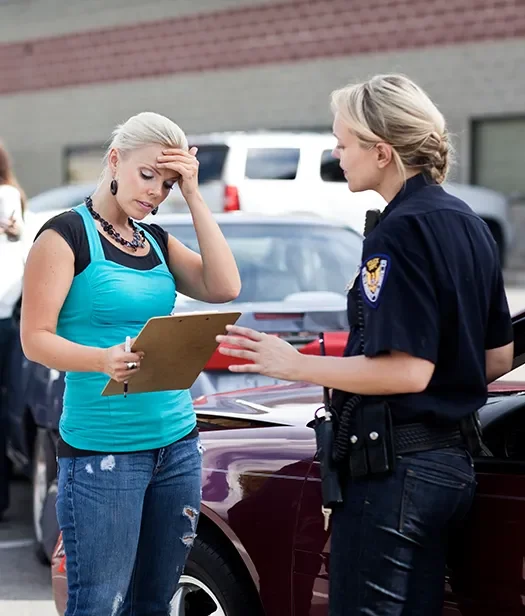
Arizona Crash Report: Police officers in Phoenix, Mesa, Tucson, and other cities document road conditions, create diagrams, issue citations, and sometimes include preliminary fault opinions. Police reports can serve as a strong foundation for establishing fault in a car accident, as they document the officer’s observations and any citations issued at the scene. While a police report is valuable, it is not conclusive proof of civil liability.
Physical Scene Evidence:
- Skid marks, yaw marks, and gouge marks in pavement
- Debris fields and final resting positions of vehicles
- Weather and lighting conditions at the time the accident happened
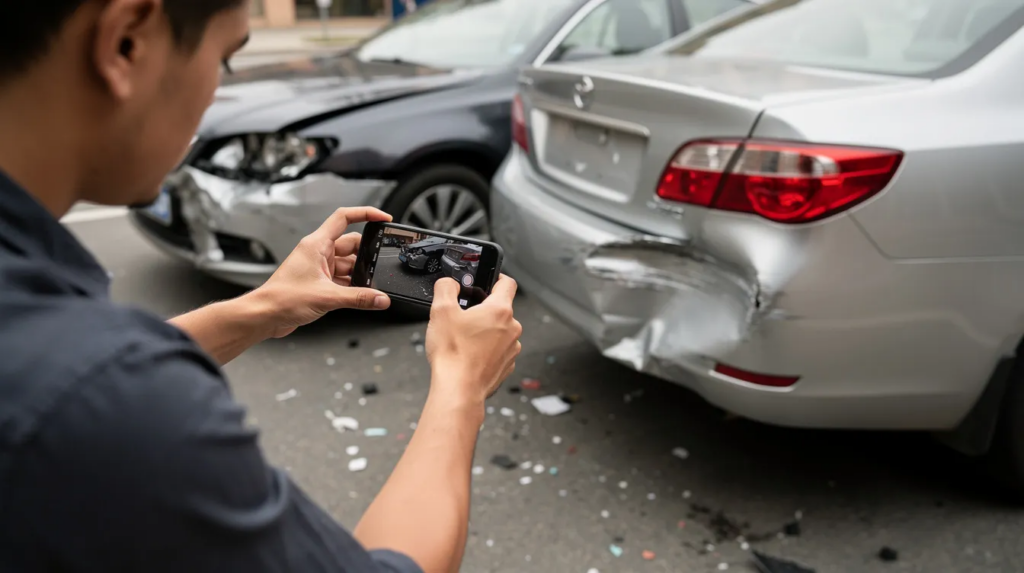
Photographs and Video Footage: Cell phone photos, dashcam recordings, surveillance footage from nearby businesses, and traffic cameras capture the impact sequence from multiple angles. This evidence can show whether the other driver was speeding or failed to stop at a stop sign.
Black Box and EDR Data: The truck’s Event Data Recorder captures speed, braking, throttle input, and steering in the seconds before the collision. This electronic evidence can prove whether the at fault driver was paying attention.
Truck-Specific Records:
- Electronic logging devices (ELDs) showing hours-of-service compliance
- GPS tracking reports and dispatch messages
- Pre-trip and post-trip inspection reports
- Brake and tire service records
Witness Statements: Independent witnesses—other drivers on I-17, pedestrians, or passengers—can describe speeding, weaving, or failure to brake before the crash.
Medical Records: Injury patterns such as crush injuries from underride collisions or spinal injuries from rollovers help confirm how the impact occurred and the force involved.
Common Arizona Truck Accident Scenarios and How Fault Is Evaluated
Rear-End Collisions: When a truck rear-ends a car in slow traffic on Loop 202, fault typically lies with the lead driver of the following vehicle. However, if a passenger vehicle strikes the back end of a stopped tractor-trailer on a dark shoulder, investigators examine whether the truck used hazard lights and reflective triangles.
Wide Turns and Side-Impact Collisions: Tractor-trailers swinging wide during right turns in downtown Phoenix can sideswipe vehicles on the passenger side. Key evidence includes turn signal use, lane encroachment, and blind spot awareness.
Lane-Change and Merge Crashes: Big rigs changing lanes on SR-101 may strike vehicles in blind spots. Investigators review mirror and signal use, and whether the car was speeding alongside the trailer.
Intersection and Red-Light Crashes: T-bone collisions where one driver runs a red light involve signal timing data, witness accounts, and potential brake failure or distracted driving evidence.
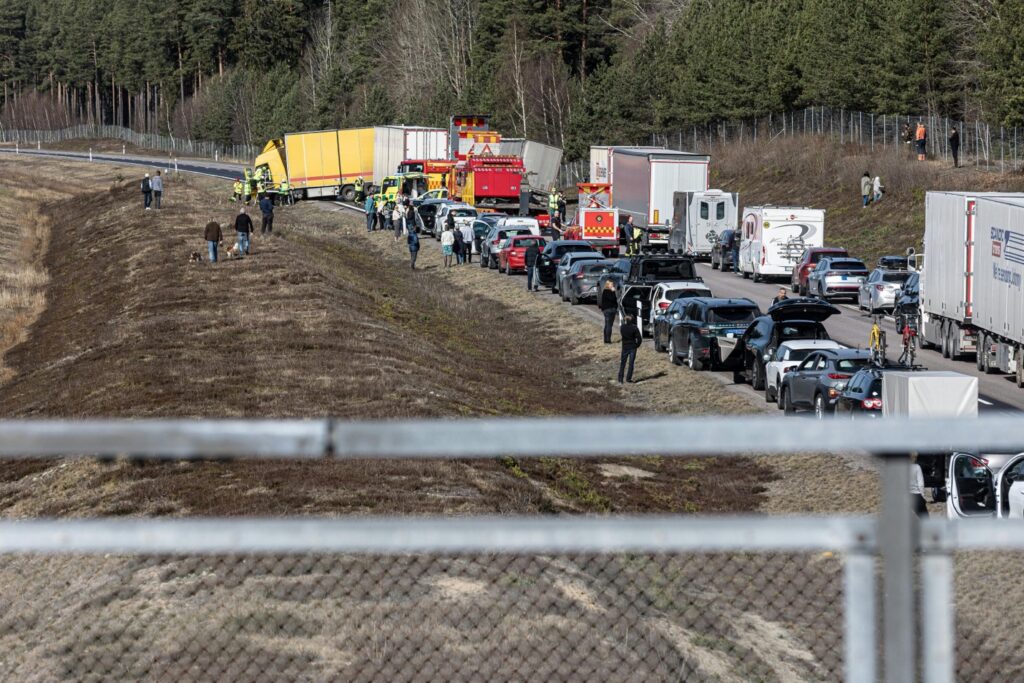
Jackknife and Rollover Crashes: On I-17 grades or during monsoon dust storms, improper braking, speeding, or unsecured cargo can cause a truck to jackknife. Investigators examine speed limit compliance and cargo securement.
Stopped or Disabled Trucks: Crashes with trucks parked on unlit shoulders require analysis of warning triangle placement, flare use, and compliance with federal roadside safety rules.
How Insurance Companies and Trucking Carriers Investigate Fault
Commercial insurers and trucking company risk managers move quickly after a serious crash—sometimes sending investigators to the accident scene the same day. Their goal is to protect their interests, which may include minimizing the carrier’s share of responsibility.
The insurance company reviews the police report, inspects vehicle damage, analyzes black box data, and interviews their driver. Adjusters may argue that you were speeding, following too closely, or made an unsafe lane change to increase your comparative fault percentage and reduce your compensation.
Large trucking companies often have in-house safety teams and defense attorneys who review logbooks, GPS records, and internal communications to prepare for potential litigation.
Warning: Providing a detailed recorded statement or signing broad medical releases for the trucking company’s insurer without consulting your own attorney can seriously harm your car accident claim. The claims adjuster works for the other party, not for you.
How an Arizona Truck Accident Attorney Proves Fault
Complex truck cases require a structured, evidence-driven approach. Here’s what the JacksonWhite personal injury team does to establish fault and protect your recovery:
- Preserve Evidence: Send immediate spoliation letters to the trucking company demanding preservation of logbooks, dashcam footage, EDR data, maintenance records, and driver qualification files
- Work with Experts: Engage accident reconstruction specialists and trucking safety experts to analyze vehicle damage, scene evidence, and electronic data
- Review FMCSA Records: Obtain compliance records, prior violations, and safety ratings to show patterns of negligent hiring or supervision
- Uncover Fatigue: Compare hours-of-service logs with GPS and fuel receipts to prove logbook falsification
- Connect Injuries to Negligence: Gather evidence to prove your injuries, medical attention needs, lost income, and other losses resulted from the crash
If necessary, this evidence is presented through depositions, discovery, settlement negotiations, or trial in Arizona Superior Court.
What You Should Do After a Truck Accident to Protect Your Fault Claim
After a serious truck collision, you may feel overwhelmed. However, certain steps can significantly impact how fault is determined:
- Call 911 immediately so police and medical responders document the scene and your injuries
- Take photos and videos from multiple angles, including close ups of vehicle damage, road conditions, skid marks, and truck company branding or USDOT numbers
- Gather witness information including names and contact details of anyone who saw the accident
- Get medical attention promptly, even if injuries seem minor
- Avoid discussing fault or apologizing at the scene
- Do not give recorded statements to any insurance company before consulting an attorney
- Exchange information with the other driver but limit conversation about what happened
- Contact an attorney quickly to preserve critical evidence
Frequently Asked Questions About Fault in Arizona Truck Accidents
Does Arizona treat fault differently in truck accidents than in regular car accidents?
Arizona applies the same pure comparative negligence rules to both truck and car accident cases. However, truck cases typically involve additional federal regulations (FMCSA rules on driver qualifications, hours-of-service, maintenance), corporate defendants, and more complex evidence. Violations of these safety rules create extra avenues to establish fault that don’t exist in ordinary car accident situations.
What if the truck driver was cited by police—does that automatically prove fault?
A traffic citation for speeding, running a red light, or other violations is important evidence but does not automatically determine fault in an Arizona personal injury lawsuit. A judge or jury considers the citation alongside all other evidence when deciding each party’s percentage of responsibility. Sometimes a driver isn’t cited even though a civil investigation later uncovers strong evidence of negligence.
Can I still recover compensation if I might be partly at fault?
Yes. Under Arizona’s pure comparative negligence system, you can recover damages even if you share some percentage of fault. Your award is simply reduced by your fault percentage. Don’t assume you have no car accident case just because you may have made a mistake—speak with an attorney before accepting any fault assessment from an insurer.
How long does a fault investigation usually take?
Timelines vary based on crash complexity, the number of parties involved, and how cooperative the trucking company is with providing records. Some liability questions can be clarified within weeks, while complex multi-vehicle crashes may require months of expert analysis. An attorney can accelerate the process through formal preservation requests and court discovery tools.
What should I bring to a consultation about a truck accident?
Bring the Arizona crash report, any photos or video footage from the scene, insurance information, medical records and bills, and correspondence from insurance companies. Also bring notes about how the crash occurred, witness contact information, and details about work missed or activities your injuries now limit.
When to Contact JacksonWhite About a Truck Accident in Arizona
The earlier you speak with an attorney after a truck crash, the better your chances of protecting key evidence and avoiding costly mistakes. Contact the JacksonWhite personal injury team immediately if you’re facing:
- Disputed fault or inconsistent statements from the truck driver
- Multiple vehicles involved in the collision
- Serious injuries, wrongful death, or suspected driver fatigue
- Alcohol or drug use by the truck driver
Arizona has deadlines (statutes of limitation) for filing personal injury and wrongful death claims, with special shorter deadlines if a public entity is involved. JacksonWhite can review your police report, photos, medical records, and insurance correspondence to advise whether the insurer’s fault assessment is fair.
Contact the JacksonWhite personal injury team today at (480) 485-4482 to schedule a consultation about your Arizona truck accident and get tailored legal advice on who may be at fault and how to protect your right to compensation.