Key Takeaways
- Arizona truck accident cases are far more complex than regular car crashes due to more severe injuries, multiple liable parties, and specialized federal and state regulations governing commercial trucks.
- A fully loaded semi truck can weigh up to 80,000 pounds—roughly 20 times heavier than an average passenger car—resulting in catastrophic injuries and significantly higher medical costs.
- Unlike typical car accident claims, truck accident claims often involve the trucking company, cargo loaders, maintenance providers, and insurers as potential defendants, not just the truck driver.
- Critical evidence like electronic logging device records, the truck’s black box data, and maintenance records can disappear within weeks or months, making prompt legal action essential.
- If you’ve been hurt in a truck crash in Arizona, contact the JacksonWhite personal injury team to discuss your options and develop a personalized legal strategy.
Arizona Truck Accidents vs. Car Accidents: Why the Difference Matters
If you’ve been injured in a Phoenix, Mesa, or broader Arizona motor vehicle accident, your legal journey will look very different depending on whether the at-fault vehicle was a commercial truck or a regular car. Accident victims in truck cases often face higher medical bills, longer recovery periods, and more aggressive defense tactics from insurance companies compared to standard car accident claims.
This article is written from the perspective of JacksonWhite, an Arizona law firm that handles both car and truck accident cases. We’ll focus on how the process and strategy change when commercial trucks are involved.
Arizona is a comparative negligence state, meaning fault can be divided among multiple parties in both car crashes and truck wrecks. However, this principle plays out differently when several commercial entities may share responsibility. The sections below walk you through the key legal differences so you know what to expect in a truck accident claim.
The Physics and Injury Severity: Trucks Hit Harder Than Cars
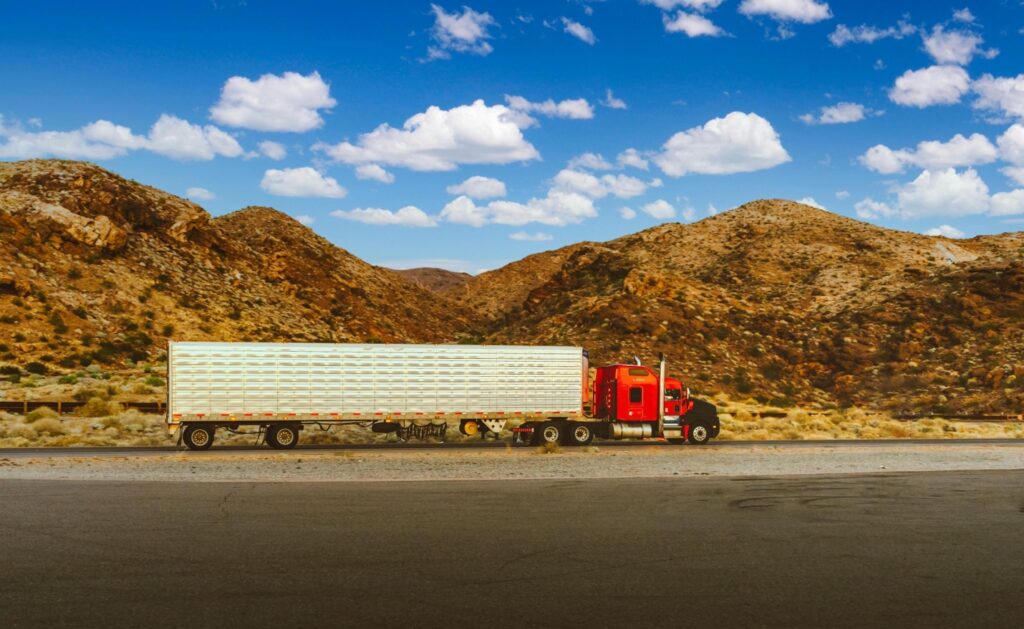
The average car weighs between 3,000 and 4,000 pounds. A fully loaded semi truck can reach 80,000 pounds—roughly 20 to 30 times heavier. When a vehicle collides with something that massive, even at moderate highway speeds, the crash forces are exponentially more destructive.
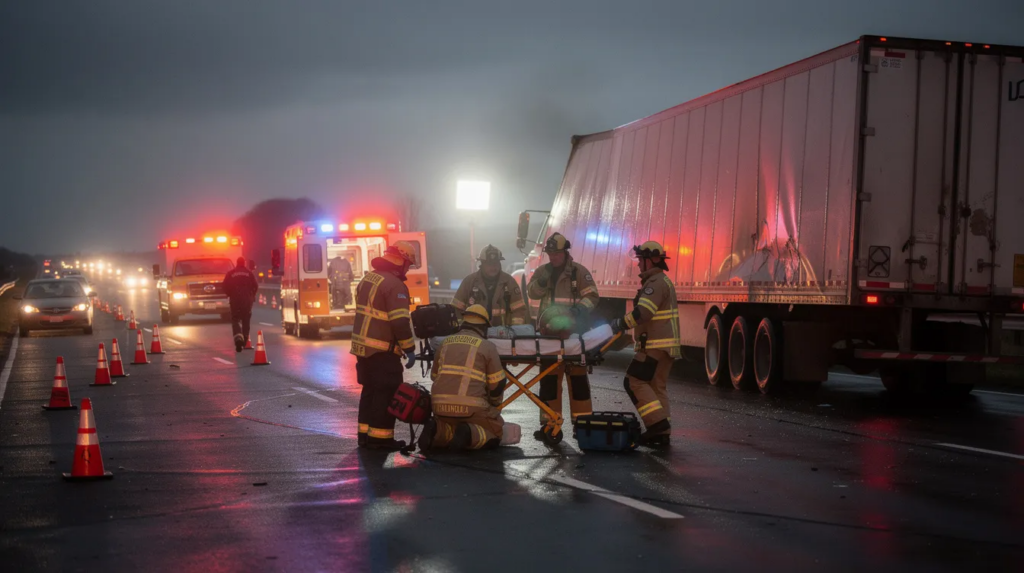
Because of the size and weight of tractor trailers, semi truck accidents more commonly involve:
- Underride crashes (where smaller vehicles slide beneath the trailer)
- Jackknife incidents
- Rollovers
- Multi-vehicle pileups
Common injuries by accident type:
| Typical Car Accident | Truck Accident |
| Whiplash | Traumatic brain injuries |
| Soft-tissue sprains | Spinal cord injuries |
| Uncomplicated fractures | Crush injuries and amputations |
| Minor broken bones | Severe burns |
In 2023, large truck crashes resulted in over 5,375 fatalities nationwide. Occupants of passenger vehicles accounted for 71% of those deaths, while commercial truck drivers represented only 11%. This stark disparity illustrates that smaller vehicles bear the brunt of these collisions.
The severity of injuries directly impacts the legal case. More serious injuries mean larger damages, more expert witnesses, and significantly more resistance from commercial insurers compared to ordinary auto accident claims.
Liability: Who Can Be Sued in a Truck Accident vs. a Car Accident?
In a typical car accident, the liability picture is relatively straightforward: one at-fault driver and their personal auto insurer. Determining fault usually involves reviewing the police report and basic negligence principles.
A commercial truck accident changes everything. Potential defendants can include:
- The truck driver (for speeding, distracted driving, or driver fatigue)
- The motor carrier or trucking company (under vicarious liability)
- Freight brokers
- Cargo loaders (for improper securement)
- Maintenance contractors or maintenance providers
- The truck manufacturer or parts manufacturers (for equipment failure or mechanical failure)
For example, consider a rear-end collision where the driver was speeding but the trucking company also failed to enforce hours-of-service rules. Both parties could be held liable under different legal theories—negligent driving and negligent supervision, respectively.
In truck accident cases, identifying all responsible parties is critical to accessing adequate insurance coverage and maximizing available compensation. In many car accident claims, only one policy is at issue. In truck cases, multiple parties may have separate policies that can contribute to your recovery.
Regulations and Standards: FMCSA Rules vs. Ordinary Traffic Laws
Arizona car drivers follow state traffic laws—speed limits, right-of-way rules, and DUI statutes enforced by the Arizona Department of Transportation. Commercial truck drivers must comply with all of those plus strict federal regulations from the Federal Motor Carrier Safety Administration (FMCSA).
Key FMCSA rules that often matter in Arizona truck cases include:
- Hours-of-service limits: An 11-hour driving cap within a 14-hour on-duty window
- Electronic logging devices (ELDs): Required for tracking driving time
- Drug and alcohol testing: Mandatory pre-employment and random testing for commercial truck drivers
- Vehicle inspection and maintenance: Annual inspections and driver vehicle inspection reports
- Cargo securement standards: Preventing load shifts during transport
Violations of these federal regulations serve as powerful evidence of negligence—far more compelling than simple traffic infractions in a car wreck. For instance, if a fatigued long-haul driver traveling through Arizona exceeded federal driving limits and caused a crash near Flagstaff, JacksonWhite would obtain and analyze the logbooks and electronic records to prove the violation.
This regulatory layer means truck accident claims typically require more technical evidence and expert testimony than ordinary car cases. Accidents involving hazardous materials add even more regulatory complexity.
Evidence and Investigation: Why Truck Cases Are More Complex
Both car and truck accidents in Arizona require police reports, photos, and witness statements. However, the investigation process for truck accidents is more extensive than for car accidents, often requiring expert witnesses and analysis of driving logs. Truck cases demand a much deeper and faster investigation.
Special evidence in truck cases includes:
- Electronic control module (ECM) or “black box” data showing speed and braking
- Electronic logging device (ELD) records
- GPS route data
- Driver qualification files (licenses, training, medical certifications)
- Maintenance records and inspection logs
- Dispatch communications
- Bills of lading
Trucking companies are only required to keep some records for limited periods—sometimes as short as six months. JacksonWhite typically sends preservation (spoliation) letters immediately after being retained to prevent destruction of crucial evidence.
In contrast, typical Arizona car accidents often have their main issues captured in the crash report and basic insurance information. There’s rarely a need for complex data downloads or federal record requests.
Truck accident investigations frequently require accident reconstructionists, trucking safety experts, and sometimes human factors experts. Many car accident claims can be resolved with far less extensive expert involvement.
Insurance Coverage and Settlement Stakes
Arizona requires minimum liability coverage for passenger vehicles—relatively modest bodily injury limits that often cap what can be recovered in a typical car accident.
Commercial trucks operate under different rules:
| Vehicle Type | Typical Insurance Minimum |
| Passenger car (Arizona) | $25,000 per person |
| Interstate trucking company | $750,000 – $1,000,000+ |
| Hazardous materials carriers | Higher coverage limits required |
Insurance coverage for commercial trucks is significantly higher than for passenger vehicles, with federal regulations requiring a minimum of $750,000 in insurance for general freight carriers. The insurance limits for passenger vehicles are typically much lower than those for commercial trucks, which can lead to higher compensation amounts in truck accident claims.
Because injuries from truck crashes are often catastrophic, the total value of a truck claim frequently reaches six or seven figures depending on the facts. This includes extensive medical care, future treatment projections, and compensation for devastating injuries.
Commercial insurers respond aggressively to these high-stakes claims. They deploy rapid response teams, make early lowball offers, and use recorded calls to limit liability—tactics less common in smaller car cases.
JacksonWhite’s role in truck accident claims includes identifying every applicable policy (primary, excess, and sometimes umbrella coverage) and pushing back against insurer tactics designed to underpay claims.
The Legal Process and Timeline: What Truck Accident Victims Should Expect
Both car and truck claims begin with medical treatment, notice to insurers, and an injury demand. However, truck cases often follow a longer and more contested path.
Typical timeline comparison:
- Car accident claims: Often settle within a few months once treatment stabilizes and liability is clear
- Truck accident claims: Extended investigation, multiple defendants, federal discovery, and motion practice can push resolution to 1-3 years or longer
From a client’s perspective, a truck case generally proceeds through these steps:
- Initial consultation with JacksonWhite
- Evidence preservation letters sent to trucking company
- Investigation and expert consultation
- Negotiations with insurers
- Filing a lawsuit in Arizona courts if necessary
- Discovery (depositions, document requests)
- Mediation
- Trial if settlement isn’t reached
JacksonWhite guides clients through each stage, explains realistic timelines, and helps avoid missteps like giving damaging recorded statements to trucking company adjusters.
How Damages Differ in Truck vs. Car Accident Cases
The categories of damages in Arizona—medical expenses, lost wages, pain and suffering, loss of enjoyment, property damage, and sometimes punitive damages—exist in both car and truck accident cases. What changes is the scale and complexity.
Truck accident damages often involve:
- Long-term hospitalizations and multiple surgeries
- Future medical projections and life-care plans
- Vocational experts calculating lost earning capacity
- Economists projecting lifetime losses
- Permanent disability accommodations
For a construction worker with permanent impairments from a truck crash, these calculations become essential to achieving fair compensation. In contrast, many standard car accidents involve shorter treatment periods, lower medical costs, and less need for extensive future-damage analysis.
JacksonWhite works with medical and economic experts to document the full impact of injuries sustained so insurers cannot minimize the long-term consequences.
What to Do After a Truck Accident in Arizona (vs. a Car Accident)
Anyone just involved in a serious truck crash may feel overwhelmed. Here are clear, practical steps to protect yourself.
Steps for both car and truck accidents:
- Call 911 immediately
- Obtain medical care, even if injuries seem minor
- Document the scene with photos if safe to do so
- Get witness names and contact information
- Follow up with all recommended medical treatment
Truck-specific actions:
- Note the trucking company name and USDOT number on the vehicle
- Preserve any dash-cam footage from your vehicle
- Do NOT sign any forms or releases from the trucking company
- Avoid detailed discussions about fault with the truck’s insurer
- Contact JacksonWhite as soon as possible so preservation letters can be sent
Commercial adjusters are trained to limit liability from the moment a crash occurs. Speaking with a truck accident attorney before providing statements protects your rights and your potential claim.
Frequently Asked Questions
Do truck accident cases always go to court, or can they settle like car accidents?
Many Arizona truck accident claims do settle out of court, just like regular car accidents. However, they typically take longer because insurers and trucking companies carefully evaluate large potential payouts. JacksonWhite prepares every truck case as if it will go to trial—gathering strong evidence and working with experts—which often leads to more serious settlement offers before a jury is ever selected. Whether a specific case settles depends on evidence strength, injury severity, and insurer reasonableness during negotiations.
How long do I have to file a truck accident lawsuit in Arizona?
Arizona’s statute of limitations for personal injury claims, including both car and truck accidents, is generally two years from the date of the crash. However, waiting is risky in truck cases because key evidence—such as driver logs and maintenance records—may be lost or destroyed long before the filing deadline. Contact JacksonWhite as soon as possible to confirm applicable deadlines and start preserving evidence immediately.
Is a truck driver always responsible when their commercial vehicle causes a crash?
No, the truck driver is not automatically at fault. Liability depends on the specific facts, including whether another driver cut them off, whether the truck had a mechanical failure, or whether cargo was improperly loaded by cargo loaders. Even when the driver shares responsibility, the trucking company, a maintenance shop, or the company responsible for loading may also be partially liable under Arizona law. JacksonWhite investigates the full picture to determine exactly who should be held accountable.
Are truck accident settlements always higher than car accident settlements?
Truck accident settlements are often higher because the injuries tend to be more severe injuries and commercial insurance has larger coverage limits. However, there’s no automatic increase just because a truck is involved. The value of any case depends on medical bills, lost income, future care needs, pain and suffering, and the strength of the liability evidence. Speak with JacksonWhite for an individualized evaluation rather than relying on averages.
Can I handle a truck accident claim on my own like a small car accident?
While some minor fender-bender car claims can be handled without a lawyer, truck accident cases are usually too complex for a do-it-yourself approach. Trucking companies and their insurers often have teams of lawyers and adjusters working from the first hours after a crash to limit exposure. At minimum, consult with JacksonWhite before speaking with the trucking company’s insurer or signing any documents so you understand your rights and options for maximum compensation.
Why Choose JacksonWhite for Your Arizona Truck Accident Case?
While many firms handle routine car accidents, truck accident litigation requires familiarity with FMCSA rules, complex insurance structures, and the aggressive defense tactics of national trucking defense teams.
The JacksonWhite personal injury team has experience representing Arizona accident victims in serious injury cases involving a collision involving large trucks across the state. Our approach includes early evidence preservation, coordination with reconstruction and medical experts, and thorough evaluation of all possible defendants and insurance policies. We focus on client communication—keeping you updated about investigations, settlement discussions, and court dates so you understand each step of the process.
If you or a loved one has been involved in a truck accident in Arizona, contact JacksonWhite’s personal injury team today at (480) 485-4482 to schedule a consultation and discuss your case.