Key Takeaways
- Never admit fault at the scene of the accident, as it can jeopardize your claim with the insurance companies.
- Fault in an Arizona motorcycle crash is proven with evidence: photos, video, witness statements, a police report, and medical records documenting your injuries. In car accident cases, this evidence is crucial to establish the at-fault driver and protect your rights.
- Arizona is a comparative negligence state, so even partially at-fault riders may still recover compensation—your award is simply reduced by your percentage of fault.
- Acting quickly after the crash (seeking medical attention, preserving your motorcycle, and avoiding social media) can significantly strengthen your claim.
- Insurance companies often try to shift blame onto motorcyclists using common tactics that an experienced attorney can counter.
- JacksonWhite’s Arizona personal injury team can investigate the crash, gather critical evidence, and build a strong liability case for injured riders. Experienced attorneys are essential in complex car accident cases to ensure you receive fair compensation.
Understanding Fault in Arizona Motorcycle Accidents
Arizona follows a “fault” system for traffic collisions, including motorcycle crashes. This means the driver who caused the accident is legally responsible for covering damages, and the at fault driver’s insurance is typically responsible for paying for those damages. Arizona also applies comparative negligence rules, which allow injured parties to recover compensation even if they share some blame for the collision.
In plain terms, “fault” means legal responsibility for causing the crash and the resulting injuries and property damage. When you file a personal injury claim after a motorcycle accident, you’re asserting that the other driver’s negligence caused your harm. Negligence might include speeding on Loop 101, texting at a red light in Phoenix, making an unsafe left turn across a rider’s lane, or failing to check blind spots before changing lanes.
It’s important to understand the difference between fault states and no fault states. In fault states like Arizona, the person who caused the accident is responsible for the damages, and the at fault driver’s insurance provides the insurance coverage for those losses. In no fault states, each person’s insurance company pays for their own medical expenses and lost wages, regardless of who caused the accident. This distinction affects how claims are handled and which insurance coverage applies.
Multiple parties can share fault in a motorcycle accident. While the other driver is often primarily responsible, a third driver, a defective vehicle component, or even a responsible government agency (for dangerous road conditions like potholes or missing traffic signs) could contribute to liability. Determining fault requires careful investigation of all the factors involved.
Proving the other driver’s fault is the foundation for recovering fair compensation. The insurance company’s decision regarding fault and compensation is heavily influenced by the evidence you provide. Without establishing liability, you cannot pursue compensation for medical bills, lost wages, vehicle damage, and pain and suffering. The stronger your evidence of the other driver’s negligence, the better your chances of receiving full compensation for your losses.
Immediate Steps at the Scene to Help Prove Fault
What you do in the first hours after an Arizona motorcycle crash—whether on I-10, SR-51, or a local road in Mesa—can make or break your liability case. Evidence at the accident scene disappears quickly, and the actions you take immediately after the collision will directly impact your ability to prove the other driver was at fault. Gather as much information as possible at the scene, including photos, witness statements, and any evidence that can help show the other driver’s fault. Never admit guilt or wrongdoing after a car accident, as this can jeopardize your compensation.
Safety and medical care always come first. If you’re injured, focus on getting help. However, if you’re physically able, the steps below can dramatically strengthen your claim later.
Call 911 and Get a Police Report
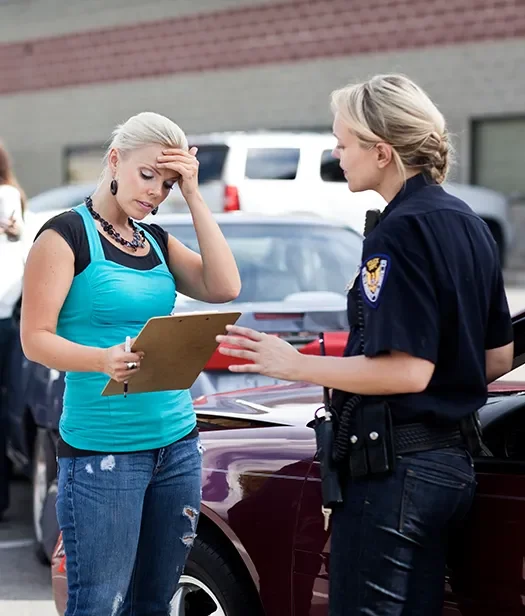
In Arizona, calling 911 after a motorcycle crash is critical both for safety and for creating an official crash report. A responding police officer from a local department or DPS will document the positions of the bike and vehicles involved, visible physical injuries, and any traffic citations issued.
If the other driver violated traffic laws—such as failure to yield, running a red light, or driving under the influence—the officer may issue a citation. These citations can significantly support a finding of fault in your favor, even though insurance adjusters are not absolutely bound by what the police report says. That being said, the police report is a key piece of evidence that will influence the insurance company’s decision regarding fault and claim outcomes.
Tell the officer exactly what happened from your perspective. Be calm and factual. Describe where you were, what signal you had, and what you observed the other driver doing. Avoid speculating about speed, distances, or what the other driver might have been thinking. Do not admit fault to the police or anyone at the scene, as this can have legal and financial consequences for your claim.
The officer’s narrative and diagram can later support your claim that the other driver caused the accident. Insurance companies will review the police report, investigate all available evidence, and negotiate with the other driver’s insurance company to determine liability. You can request the Arizona crash report number at the scene and obtain a copy for your attorney. This document becomes a cornerstone of your car accident claim.
Gather Evidence at the Scene (If You Can)
Use your phone to photograph the entire accident scene. Capture:
- Lane markings and road conditions
- Traffic lights, stop signs, and traffic signs
- Skid marks and debris patterns
- Weather and lighting conditions
- The positions of all vehicles involved
Take close-ups of damage to your motorcycle and the other vehicle, especially at impact points. These photos can help accident reconstruction experts determine how the collision occurred and who was at fault.
Collect contact and insurance information from the other driver, including their license, license plate, and insurance card. Also gather contact and insurance details from any witnesses—name, cell number, and email. If witnesses are willing, ask them for a short written or recorded statement describing what they saw.
When dealing with insurance companies during the claims process, keep detailed records of all communications, including emails, phone calls, and letters. This documentation can be crucial if there are disputes about fault or claim details.
If you’re too injured to document the scene yourself, ask a trusted friend, family member, or even a helpful bystander to take photos and gather information on your behalf.
Avoid Admitting Fault or Making Casual Statements
Do not admit fault or apologize at the accident scene—even out of politeness. You should never admit fault at the scene of the accident, as it can jeopardize your claim with the insurance companies. Saying “I’m sorry” or “I didn’t see you either” can be twisted into an admission of fault by an insurance adjuster later.
When speaking to the other driver and police, stick to basic facts:
- Where you were traveling
- What traffic signal you had
- What you observed before the collision
Do not speculate about your speed, braking distance, or whether you “could have done something differently.” These casual statements can undermine your claim.
Decline to give a recorded statement to any insurance company at the scene or immediately after the crash. The at fault driver’s insurance company may contact you quickly, but you’re under no obligation to provide a detailed statement without first speaking to an experienced attorney.
Avoid social media. Don’t post photos or comments about the crash. Even innocent posts can be taken out of context and used against you.
Key Types of Evidence That Can Prove the Other Driver Was at Fault
Successful motorcycle accident cases in Arizona are typically built on a combination of physical evidence, official records, and expert analysis. No single piece of evidence is usually enough on its own—it’s the combination that creates a compelling liability case.
The main types of evidence include:
- Police reports and traffic citations
- Photographs, video, and physical damage analysis
- Witness statements and expert testimony
- Medical records and injury documentation
In car accident cases, it is crucial to document all accident details and gather as much evidence as possible before you file a claim. You should document the accident details in writing as soon as possible after returning home to ensure accuracy and support your claim.
An experienced car accident lawyer can help track down and preserve time-sensitive evidence that you might not know exists—such as traffic camera footage or event data recorder information from the other vehicle.
Police Report and Traffic Citations
An Arizona collision report typically includes:
| Report Element | What It Shows |
| Date, time, and location | When and where the accident occurred |
| Weather and road conditions | Environmental factors affecting the crash |
| Parties involved | Names, contact information, vehicles |
| Officer’s narrative | Description of what the officer believes happened, including assessment of driver’s fault |
| Diagram | Visual representation of vehicle positions |
| Contributing factors | Causes the officer identified |
| Citations issued | Traffic violations charged |
If the other driver was cited—for example, under ARS §28-701 for speeding, ARS §28-772 for failing to yield while turning left, or ARS §28-645 for running a red light—this can significantly support a finding of the other driver’s fault in your favor.
Even without a citation, the officer’s observations matter. If the police report notes that the driver “admitted he didn’t see the motorcycle,” this statement can help establish negligence and clarify the driver’s fault.
When the accident is determined to be the other driver’s fault, the at-fault driver or their insurance company is typically responsible for covering the costs of medical bills, property damage, lost wages, and other related expenses.
If you believe the report contains errors, a personal injury attorney can help gather contrary evidence to challenge the insurance company’s reliance on inaccurate information.
Photographs, Video, and Physical Damage
Scene photos can show which vehicle entered an intersection first, where the bike came to rest, and how far debris was thrown. This evidence helps experts reconstruct speed, direction, and the sequence of events.
Surveillance footage from nearby businesses, doorbell cameras, or traffic camera footage at major intersections can capture the collision or the other driver’s behavior before impact. This type of evidence is often crucial—but it can be overwritten or deleted within days, making quick action essential.
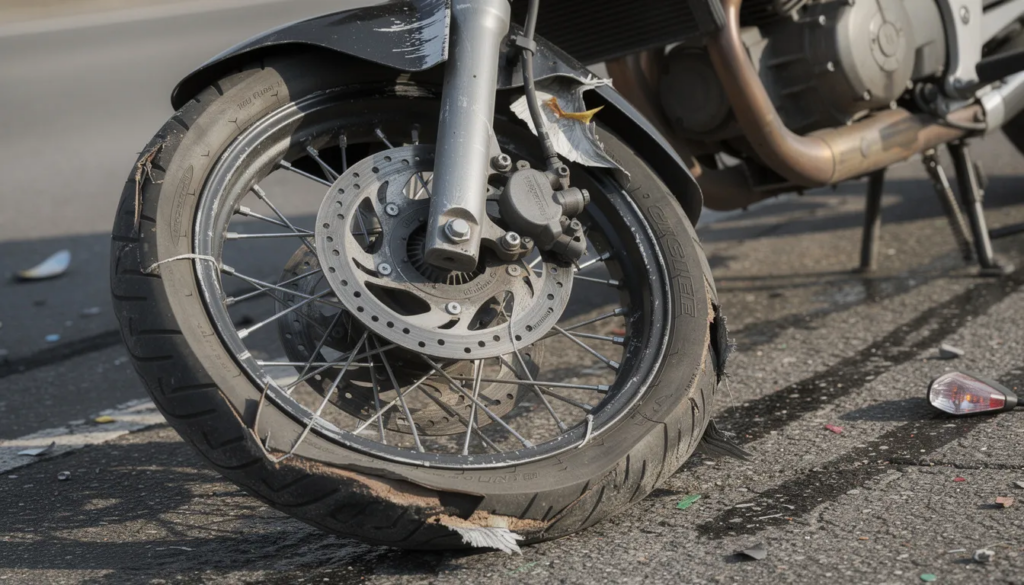
The pattern of damage on your motorcycle and the other vehicle can refute false claims about who changed lanes or who “came out of nowhere.” For example, side impact damage to your front wheel combined with front-corner damage on a car supports a scenario where the car turned into your path.
Don’t rush to repair or scrap your motorcycle. The bike itself is evidence. Have it photographed and inspected before making any repairs. Similarly, preserve damaged riding gear—your helmet, jacket, gloves, and boots—because impact marks on this gear can show the mechanics of the crash. Documenting all physical damage is crucial, as vehicle repairs are a key part of economic damages covered in insurance claims. Economic damages include coverage for medical bills, vehicle repair or replacement costs, and lost wages.
Witness Statements and Expert Testimony
Neutral third-party witnesses—drivers behind the crash, pedestrians at a crosswalk, or nearby homeowners—often carry more weight than the parties’ own statements. Their accounts provide independent verification of what happened and can be crucial when filing a third-party claim against the at-fault driver’s insurer.
A third-party insurance claim is filed with the at-fault driver’s insurer to recover compensation for damages and injuries after a car accident that was not your fault. Evidence from witnesses and experts can strongly support your third-party claim by providing objective details about the accident.
Obtain written statements or recorded interviews quickly, while memories are fresh. Insurance companies may contact witnesses, and their recollections can change over time.
In more serious cases, JacksonWhite may use accident reconstruction experts who can:
- Analyze skid marks and yaw marks
- Interpret vehicle damage patterns
- Review timing of traffic signals
- Create diagrams or animations showing the crash sequence
- Review event data recorders from the other driver’s vehicle to determine speed, braking, and steering in the seconds before impact
These experts can definitively show, for example, that a car could not have had a green arrow at the same time the rider had a solid green light.
Medical Records and Injury Documentation
Prompt treatment at an Arizona emergency room or urgent care—such as Banner, HonorHealth, or a local hospital—creates a timeline linking your bodily injury to the crash. This documentation is essential for proving that your bodily injury resulted from the accident, not some other cause. You should seek medical attention immediately after an accident, as adrenaline may mask injuries that appear later.
Diagnostic imaging like X-rays, CT scans, and MRIs can corroborate the forces involved in the collision and contradict claims that your bodily injury is minor or pre-existing.
Consistent follow-up care matters. Ongoing treatment with orthopedic specialists, neurologists, and physical therapists builds a clear record of limitations resulting from the crash. Pain journals, work restrictions from medical professionals, and documentation of lost income further demonstrate the real impact of the other driver’s negligence.
Avoid gaps in treatment whenever possible. Insurers may argue that treatment gaps mean your bodily injury wasn’t serious or was caused by something unrelated to the car crash.
Arizona Comparative Negligence: What If They Say You Were Partly at Fault?
Arizona uses “pure comparative negligence,” meaning you can recover damages even if you share some fault for the accident. However, your award is reduced by your percentage of fault.
Example: If you’re awarded $100,000 in damages but found 20% at fault, you receive $80,000.
If you’re not at fault, you typically have two options to recover your damages: filing a claim against the fault driver’s insurance or using your own insurance.
Insurance companies frequently try to shift blame onto motorcyclists using arguments like:
- “You were speeding”
- “You were lane-splitting” (illegal in Arizona)
- “You weren’t visible enough”
- “You weren’t wearing protective gear”
Proving the other driver’s fault often includes rebutting these exaggerated or unfair claims about rider behavior. A JacksonWhite attorney can negotiate aggressively when an insurer assigns an unrealistic fault percentage to reduce your payout.
Common Fault Disputes in Motorcycle Cases
Several scenarios commonly lead to fault disputes:
| Scenario | Insurer’s Typical Argument | How Evidence Helps |
| Left-turn crash | “Driver had a green arrow” | Signal timing analysis, witness accounts |
| Rear-end collision | “Rider stopped suddenly” | Skid mark analysis, following distance calculations |
| Lane-change sideswipe | “Bike was in blind spot” | Impact angle, damage patterns, camera footage |
| Speed-related crash | “Motorcycle was speeding on I-17” | Traffic camera timestamps, reconstruction analysis |
These disputes are often resolved by analyzing signal timing, skid marks, witness statements, and the angle of impact. Even if you made a minor mistake, the other driver may still bear the majority of fault if they violated a clear traffic rule.
Riders can protect themselves by using visible gear, ensuring functioning lights, and—where legal—recording rides with helmet or bike-mounted cameras.
Working With Insurance Companies After a Motorcycle Crash
Insurance companies often dispute or minimize motorcycle claims and may be quick to blame the rider. Dealing with insurance companies requires patience, thorough record-keeping, and careful communication to protect your rights and your claim. Remember, insurance companies must act in good faith when evaluating your claim.
You’ll typically need to notify your own driver’s insurance company promptly after an auto accident, even if you were clearly not at fault. This preserves your insurance coverage rights under your auto insurance policy. Be aware that your driver’s insurance company may require you to pay a deductible when filing a claim, even if you are not at fault.
Critical rule: Do not give detailed or recorded statements to the other driver’s insurance company without first speaking with an attorney. An off-hand comment can be used to shift fault onto you.
Your Own Insurance Company vs. The Other Driver’s Carrier
Understanding the difference between first-party and third-party claims is essential:
First-party claims are filed under your own policies:
- MedPay (medical payments coverage)
- Personal injury protection (PIP), which can help cover medical expenses regardless of fault
- Uninsured or underinsured motorist coverage, which protects you if the at-fault driver does not have enough insurance to cover your losses
- Collision coverage
Third-party claims are filed against the at-fault driver’s insurer (the other driver’s insurance) to recover compensation for their negligence.
Be cooperative but cautious with your own insurer. Even your own insurance company has a financial interest in limiting payouts.
The other driver’s insurance company may contact you quickly, seeking a recorded statement or asking you to sign broad medical authorizations. Do not sign broad medical releases or accept early settlement offers until you understand the full extent of your injuries. Early settlements often fail to account for ongoing medical treatment, future medical costs, and long-term lost income.
JacksonWhite can step in to negotiate with both insurance companies, collect documentation, and push back against unfair fault determinations.
Common Insurance Tactics That Can Undermine Your Fault Claim
Insurance adjusters use various tactics to minimize your claim:
- Pre-existing condition arguments: Claiming your injuries existed before the crash
- Mischaracterizing the police report: Taking statements out of context, which can influence the insurance company’s decision
- “No objective evidence” claims: Dismissing your version of events and affecting the insurance company’s decision on fault
- Misstating Arizona law: Implying automatic fault based on lane positioning, visibility, or gear choices
- Delay tactics: Requesting repetitive information hoping you’ll accept a low offer out of frustration
A documented paper trail—emails, letters, medical records, and wage statements—is crucial when pushing back on these tactics and can impact the insurance company’s decision regarding your claim. If the at-fault driver’s insurance denies your claim, you can appeal their decision with additional evidence. Legal representation tends to change how seriously insurers treat a claim, especially in moderate to severe injury cases.
How an Arizona Motorcycle Accident Lawyer Proves the Other Driver Was at Fault
JacksonWhite’s personal injury team can take over the investigation and evidence gathering so you can focus on healing. Hiring a car accident attorney can help you navigate the complex legal process after an accident that was not your fault. Our attorneys handle the complex work of building a compelling case that proves the other driver’s fault and guides you through each stage of the legal process.
The firm takes concrete steps including:
- Conducting site investigations
- Interviewing witnesses
- Subpoenaing video footage
- Consulting with accident reconstruction experts
- Building a settlement or trial strategy
We coordinate medical documentation, calculate damages including future medical expenses and lost wages, and present a comprehensive case tying the other driver’s negligence to your specific injuries and losses. An experienced car accident attorney can negotiate with the at fault driver’s insurance company to help you receive fair compensation and recover the compensation you deserve.

Investigation, Reconstruction, and Legal Strategy
JacksonWhite may dispatch investigators to photograph the scene, measure skid marks, and identify additional witnesses in nearby homes or businesses—sometimes uncovering evidence you didn’t know existed. In car accident cases, a thorough investigation is essential to secure compensation and protect your rights.
Lawyers can request or subpoena:
- Traffic camera footage
- 911 recordings
- Phone records (if distracted driving is suspected)
- Event data from vehicles
Legal representation is crucial in ensuring that you do not accept a low settlement offer from the insurance company.
Working with reconstruction experts, the legal team creates diagrams, time-distance analyses, and reports attributing fault to the other driver. We review all applicable Arizona statutes and local ordinances to identify specific violations—speeding, failure to yield, following too closely, or improper lane changes.
This thorough investigation supports either a negotiated settlement or, if necessary, presentation of the case to a jury in an Arizona courtroom.
Protecting Your Rights, Deadlines, and Compensation
Arizona has statutes of limitations for personal injury and property damage claims. Missing these deadlines can bar recovery entirely—making timely action critical.
In serious motorcycle cases involving fractures, traumatic brain injury, or spinal injuries, the lawyer works with medical professionals to project future care needs and lost earning capacity. This ensures your claim accounts for long-term accident related expenses, not just immediate medical bills.
Attorneys advise on whether to use health insurance, MedPay, or medical liens while the liability claim is pending. We seek all available sources of coverage:
- The at-fault driver’s liability policy
- UM/UIM coverage from your own policy
- Additional parties if commercial vehicles are involved
Our goal is to help you receive fair compensation for your injuries and losses. If the insurance company denies your claim or offers a low settlement, you have the right to sue the at-fault driver in civil court. If a fair settlement cannot be reached, you also have the right to take the case to court.
A key role of your lawyer is preventing you from unintentionally weakening your fault case through social media posts, informal conversations, or direct negotiations with insurance adjusters.
Frequently Asked Questions About Proving Fault in Arizona Motorcycle Accidents
What if there were no witnesses to my motorcycle accident?
Even without live witnesses, fault can be proven using photos, vehicle damage patterns, road markings, traffic signal timing, and surveillance footage from nearby cameras. If you have physical evidence and proper documentation, you can still file a claim with the insurance company, even if there are no witnesses to the accident. An attorney may hire an accident reconstruction expert to interpret physical evidence and challenge the other driver’s version of events. Contact JacksonWhite quickly to maximize chances of locating evidence before it’s overwritten or lost.
Does not wearing a helmet affect proving fault in Arizona?
Arizona helmet laws don’t require riders 18 and older to wear helmets, though doing so is strongly recommended. Helmet use relates to the extent of head injuries, not who caused the crash. Insurers may argue that a lack of helmet increased injury severity—potentially affecting damages—but it doesn’t excuse the other driver’s negligent conduct. Speak with an experienced car accident attorney about how this might affect your specific case.
What if I was going a little over the speed limit when I was hit?
Under Arizona’s comparative negligence rule, minor speeding doesn’t bar recovery but may be used to argue for a percentage of fault on your part. Careful analysis of skid marks, traffic flow, and impact damage can sometimes show speed wasn’t a significant factor. An experienced car accident lawyer can push back if an insurer overstates speed’s role. Even if you were partly at fault for speeding, the other driver can still be primarily responsible for an unsafe left turn or failure to yield.
How long do I have to file a motorcycle accident claim in Arizona?
Arizona generally has a two-year statute of limitations from the date of the crash for most personal injury claims. Claims involving public entities may have much shorter notice deadlines. Waiting too long makes proving fault harder because evidence disappears and witness memories fade. Contact JacksonWhite as soon as possible to review the timelines that apply to your situation.
Do I really need a lawyer if the other driver’s fault seems obvious?
Even in seemingly clear cases—like left-turn or rear-end collisions—insurance companies may still dispute fault or minimize your injuries. The legal process can be complex, involving steps like gathering evidence, negotiations, and possibly court proceedings. A car accident attorney can help you understand your rights and the compensation you may be entitled to after an accident. A lawyer ensures all relevant evidence is preserved and presented effectively, leaving less room for insurers to shift blame. An experienced attorney can also identify additional coverage sources you might overlook. JacksonWhite offers a free consultation so you can learn whether handling negotiations alone is truly in your best interest.
When to Contact JacksonWhite After a Motorcycle Accident
Don’t wait until insurance negotiations break down to talk with an attorney, especially if your injuries are significant or fault is being contested. Early legal involvement can make the difference between a successful claim and a frustrating battle with insurance companies.
The personal injury team at JacksonWhite is ready to help individuals involved in auto accident claims who are dealing with contested fault. Initial consultations with the JacksonWhite personal injury team are low-pressure and focused on answering your questions about fault, evidence, and next steps. There’s no obligation—just helpful information about your options.
If you’ve been injured in a motorcycle accident in Arizona and need help proving the other driver was at fault, contact the JacksonWhite personal injury team today at (480) 485-4482 to schedule a consultation. Our experienced attorneys can investigate your crash, navigate insurance claims on your behalf, and fight for the fair compensation you deserve.